 SousVideInsight
Master festive table setting with Made In dinnerware and Lenox flatware, plus pro tips for a stunning holiday dinner party.
The first frost had just kissed the windowpanes of Elena’s Vermont farmhouse when she unfolded the heavy linen tablecloth and let it billow onto the old oak table. It was the third Sunday of December, 2026, and the house already smelled of mulling spices and pine. For Elena, a food stylist who had spent decades setting stages for magazine covers, this dinner was different. Tonight, twelve of her closest friends would gather for a feast that had been months in the planning, and the table itself would be her most ambitious set piece yet.
She stepped back and surveyed the glowing surface. The centerpiece—a low tangle of cedar boughs, dried orange slices, and beeswax candles—drew the eye without blocking anyone’s view. But the true drama would come from the places she was about to set. Over the next hour, Elena would transform this table into a functional work of art, pulling from a carefully curated collection of gear that she had tested, loved, and occasionally cursed at.
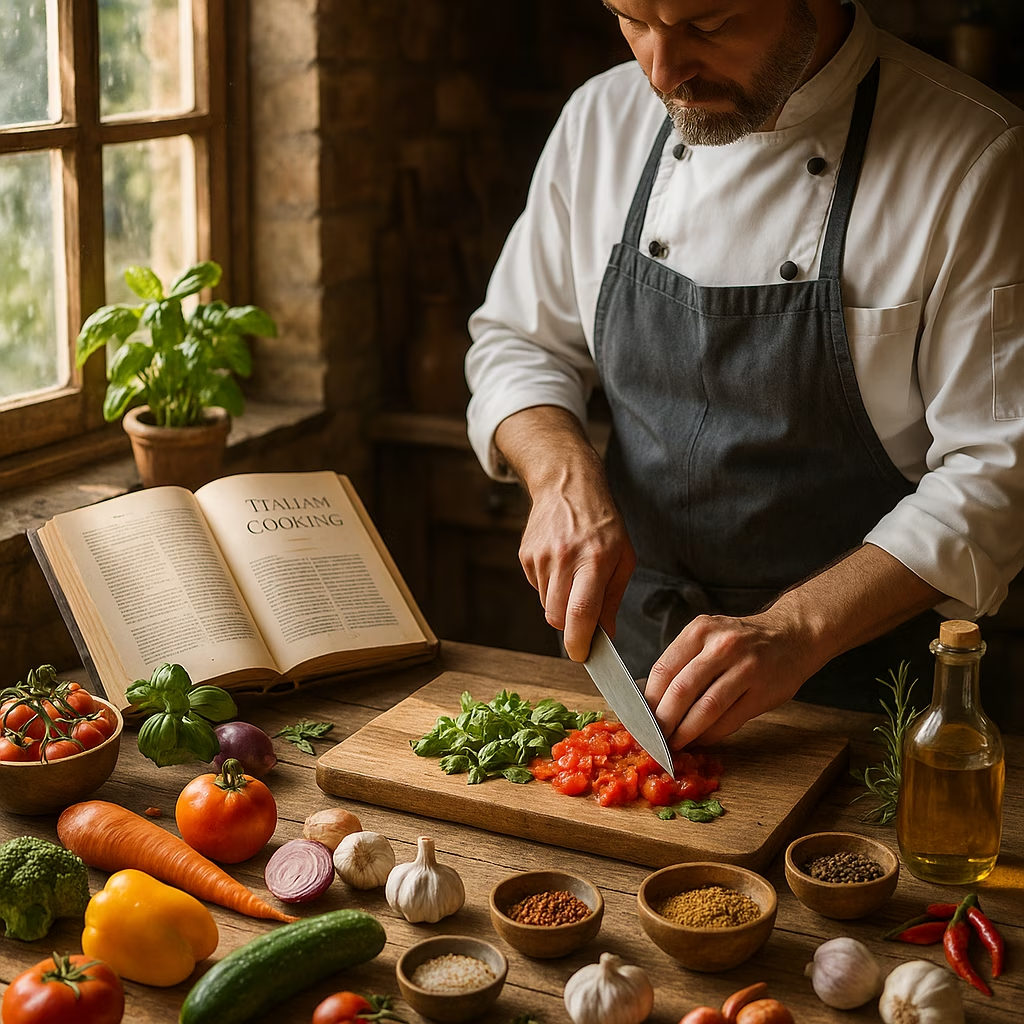
She started with the plates. A stack of Made In’s 45-piece porcelain dinnerware waited on the sideboard, each piece glazed in a creamy white that felt both modern and timeless. Elena had first encountered this English-made set during a catering gig in Brooklyn two years ago, and she’d never looked back. It could handle an appetizer of smoked trout rillettes, a soup course of chestnut bisque, the main roast, a bread and butter plate, and still leave room for dessert. She recalled the test that convinced her: microwaving a plate loaded with sticky short ribs, then throwing it straight into the dishwasher. No scratches, no stains, no warping. Tonight, it would carry her menu from start to finish.
Next came the flatware. Elena reached for her trusty Lenox Portola 65-piece set, the same one that had survived three Thanksgiving brawls and a toddler’s birthday. Its flared, beaded handles caught the candlelight, whispering of formality without shouting. She laid the forks on the left, knives and spoons on the right, exactly as her mentor Annie O’Hare had taught her.
“If everything goes family-style, you can stack the napkin right on the plate,” Annie had said during one of their marathon phone calls. Elena smiled at the memory and placed a folded Burgundy cotton-blend napkin on each charger. The deep wine color popped against the white porcelain, and the soft polyester blend meant she could skip ironing—a small mercy when you’re hosting a dozen people.
Then came the specialty players. Elena knew that the main course—a bone-in prime rib roasted with rosemary and garlic—demanded more than a dinner knife. She opened a slim wooden block and extracted the four German-made steak knives she’d bought after testing 36 sets for a magazine article. The rainbow-hued handles, which she’d chosen in a deep teal, added a playful note. But the blades were serious business: they’d sliced through filet mignon and tough skirt steak with equal grace, and a professional edge tester had confirmed their sharpness after a dozen dinners. Tonight, they’d make easy work of the beef.
Elena paused to adjust the water glasses—stackable, faceted 12-ounce tumblers that had topped a review she’d read on Serious Eats back in 2024. They were sturdy enough to survive her stone kitchen floor, yet their blooming rims made them look almost delicate. Above the knives, she set the water glass, then placed a Riedel universal wine glass slightly above and to the left. The tapering bowl was a compromise she’d learned to love: narrow enough to keep Champagne’s effervescence alive, yet wide enough to let a Barolo breathe. With a mixed crowd of wine lovers, she couldn’t afford a separate glass for every varietal. These all-rounders did the trick.
For those who preferred a cocktail, she lined up six Cocktail Kingdom coupe glasses on a silver tray. The thick-walled coupes had survived a disastrous New Year’s Eve party where a tipsy uncle had knocked one off the bar. Not a chip. They insulated Manhatattans beautifully and, she had to admit, made her feel like she was in a 1920s speakeasy.
As the oven timer beeped, Elena turned to the heavy work. The Misen large-capacity braiser sat on the stove, its crimson enamel exterior glowing like a jewel. At over 16 inches wide and 18 pounds empty, it could sear a whole duck and then go straight to the table. She grabbed its wide handles with quilted mitts and heaved it onto a trivet. The braised red cabbage and apples inside bubbled cheerfully, and the cast iron would keep it warm through the first course.
Now came the roast. Elena lifted the prime rib from the oven and set it on her walnut carving board. The 18-by-24-inch surface had a deep juice trench that she had once described as “the moat that saves your tablecloth.” She picked up her Wüsthof carving set, a full-tang, triple-riveted duo that felt like an extension of her arm. The eight-inch hollow-edge blade slid through the meat without tearing, and the compact fork held each slice steady. She’d once carved a whole ham in front of twenty people using this set, and the performance had been so smooth that a guest had asked if she’d been a surgeon in a past life.
The dishes began their migration to the table. Elena used a Williams Sonoma ceramic serving platter set—three sizes, all with concave centers and built-in handles. The largest, an 18-inch oval, cradled the sliced beef. A 16-inch one held roasted root vegetables, and the 12-inch platter was piled high with mashed potatoes. The handles were tight, but they let her carry three dishes at once, a feat her husband called “the waitress grip.”
Small details mattered. She placed the JB Prince stainless steel sauce spoon in the gravy boat, its elongated bowl perfect for drizzling red wine jus. A Peugeot pepper mill, matte black and grinding with 75 coarseness settings, stood at attention. And on the sideboard, a crystal-clear cake stand with a domed lid displayed a towering spiced apple cake. Beside it, an OXO pie server waited for the first slice, its serrated edge and flexible head guaranteeing clean cuts through the flakiest crust.
By the time the doorbell rang, Elena had set the final piece: a small bread plate with a butter knife on the left of each setting, as Annie had taught her. The candles flickered, the wine breathed, and the table looked exactly as she had imagined—festive, functional, and ready to host a night of stories.
As the guests spilled in, rosy-cheeked and bearing bottles, one of them stopped and stared. “Elena,” she whispered, “this belongs in a magazine.” Elena laughed and handed her a coupe glass of sparkling Vouvray. “It’s just dinner,” she said. But they both knew it was far more than that.
The Art of Setting a Holiday Table in 2026
Elena’s table didn't happen by accident. She followed a philosophy that balanced beauty with pure utility. Here’s how she built it, piece by piece.
🍽️ The Foundation: Dinnerware and Flatware
A holiday meal moves through multiple courses, so your plates need to keep up. Elena’s setup:
-
Charger plate (optional, but adds formality) – removed after appetizers.
-
Appetizer plate on top of the entrée plate for the first course.
-
Entrée plate – the main canvas.
-
Bread and butter plate on the left.
-
Flatware placed all at once: forks on the left, knives and spoons on the right, dessert fork and spoon across the top.
🍷 Glassware: A Drink for Every Course
With multiple drink options, glass placement matters:
-
Water glass directly above the knives.
-
Wine glass slightly above and to the left of the water glass.
-
If serving both white and red, white wine glass goes on the inside (closer to the water), red on the outside.
-
Coupe or cocktail glass can be brought to the table or served from a bar cart.
🔪 The Carving Station
For large roasts, a dedicated carving board with a juice trench and a sharp, balanced carving set are non-negotiable. Elena always sets up a side table within arm’s reach of the head of the table, so she can slice and serve without leaving her seat.
🍲 Servingware that Transitions
Look for pieces that move from oven to table, like enameled cast iron braisers and ceramic platters with handles. Not only do they cut down on dishwashing, but they also keep food warm longer.
🌿 The Final Flourishes
A pepper mill, a sauce spoon, a pie server—these small tools elevate the experience from canteen to feast. And a beautiful cake stand turns dessert into a centerpiece.
Elena’s 2026 holiday table was more than a meal; it was a memory machine. Every knife, plate, and glass had been chosen not just for how it looked, but for how it performed under the delicious pressure of a real dinner party. As she sat down at last and lifted her fork, she knew the best gift she could give her guests was a table that let them relax, eat, and laugh together—without a single worry about a leaking platter or a dull blade.