 SousVideInsight
Discover the world of Japanese knives—high-carbon steel, versatile gyuto, and specialized deba & honesuki blades crafted for precision and craftsmanship excellence.
As someone deeply immersed in culinary tools, I’ve always been fascinated by the intricate world of Japanese knives—where discussions about bevel angles, carbon percentages, and esoteric blade shapes ignite passionate debates among enthusiasts like myself. The sheer diversity can feel overwhelming: deba, gyuto, santoku, nakiri, honesuki... each designed with a purpose that reflects centuries of craftsmanship. Having tested and used countless blades over the years, I’ve curated a personal insight into what makes these knives exceptional, whether you seek an all-purpose workhorse or a specialized tool for precise tasks.
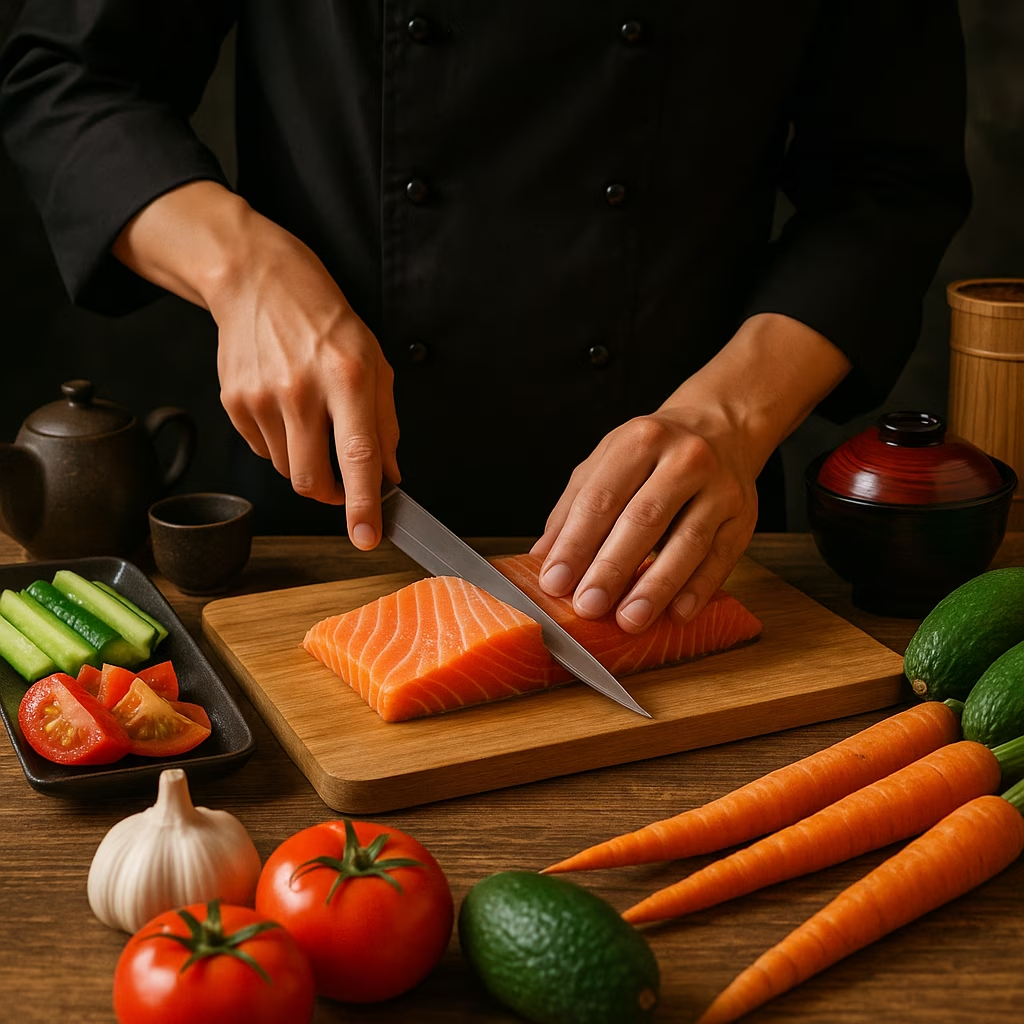 :max_bytes(150000):strip_icc():format(webp)/sea-chefs-knives-2-test-misono-ux10-no-721cm-nsimpson-183-dc7f55795f554959aaf11ebdd502340b.jpeg)
🔪 What Defines a Japanese Knife?
There’s no single answer—Japanese-style knives can even come from Western brands! But common threads include high-carbon steel construction and distinct shapes. While some, like deba or nakiri, are purely traditional, others like the gyuto adapt Western designs with unique twists: asymmetrical bevels, lighter weight, and extreme curvature. Unlike double-beveled Western chef’s knives, many Japanese blades favor single-bevel edges, demanding technique but rewarding with unparalleled sharpness.
⚔️ Gyuto: The Versatile Warrior
Think of this as Japan’s answer to the chef’s knife. Ranging from 6–12 inches, gyutos like the Misono UX10 Gyutou ($220) or Misono Carbon Steel Gyuto ($125) excel at everything from dicing vegetables to slicing proteins. Their high-carbon steel holds an edge fiercely, but remember: asymmetrical bevels require handedness-specific choices.
People Also Ask: Why choose carbon steel over stainless? While carbon blades stay sharper longer, they demand meticulous care—dry thoroughly and oil occasionally to prevent rust. Stainless options forgive neglect but dull faster.
:max_bytes(150000):strip_icc():format(webp)/sea-santoku-knives-3-grace-kelly-aa17c0172e5746db82b4441f44d14216.jpg)
🥬 Santoku & Nakiri: Vegetable Virtuosos
Born as a home-cook-friendly gyuto alternative, the santoku (like Mac’s Hollow Edge, $129) uses a push-cut motion perfect for herbs, boneless meats, and precise work. Its flat edge and sheep’s-foot profile reject rocking motions—ideal for controlled chopping. For dedicated veggie prep, the rectangular nakiri (e.g., Tojiro Fujita, $122) glides through onions and peppers. Its straight blade demands a vertical chop, minimizing food tearing.
-
Beginner Pick: Tojiro’s 6.7-inch Santoku ($99) offers stainless ease with a subtle curve for transitional users.
-
Editor’s Choice: Global’s Cromova 18 Nakiri ($122) features a grippy dimpled handle—Riddley, our associate editorial director, swears by its decade-long reliability.
🐟 Deba & Honesuki: Specialized Masters
The deba isn’t your typical fillet knife. Thick-bladed and heavy (like Kai Seki’s $45 model), it smashes through fish bones with a chisel-edge bevel. Meanwhile, the honesuki (boning knife) shines in poultry breakdown. Tojiro’s 6-inch Honesuki ($99) leverages rigidity and a pointed tip for joint precision—though sharpening it requires skill.
People Also Ask: Do I need task-specific knives? For casual cooks, a gyuto or santoku suffices. But if you fillet whole fish weekly or break down chickens, specialized blades save time and effort.
✨ Honorable Mentions
-
Paring Perfection: Tojiro’s 3.5-inch DP Paring Knife ($45) excels at delicate tasks like citrus supremes, though its carbon core needs gentle handling.
-
Bread Beast: Tojiro’s Serrated Slicer ($50) isn’t traditionally Japanese but delivers razor-sharp performance on crusty loaves at a steal.
:max_bytes(150000):strip_icc():format(webp)/winners-graphic-japanese-knives-ashlee-redger-c24b1b84e44c452aa5c9db8c03baae7d.jpg)
Final Thoughts
Choosing a Japanese knife hinges on your cooking style and willingness to adapt. Carbon steel rewards the meticulous with longevity; stainless suits low-maintenance routines. Asymmetrical edges demand technique but offer surgical precision. Whether you’re drawn to the gyuto’s versatility or the nakiri’s veggie-focused design, each blade tells a story—one I’ve loved exploring in my own kitchen journey.