 SousVideInsight
Master sous vide turkey perfection by understanding its precise temperature control for moist white meat while recognizing traditional methods' superiority for flavorful dark meat.
I remember my first sous vide turkey attempt back in 2007 like it was yesterday. There I was, thinking I'd revolutionize Thanksgiving by cooking everything in water baths - bone-in breast at 165°F, legs at 150°F, with some pork fat thrown in for good measure. What emerged after hours of cooking was a disappointing mess: dry breast meat, tough legs, and a kitchen filled with smoke as I desperately tried to crisp the skin while balancing bourbon and conversation with family. The worst part? It tasted nothing like the deep, roasty holiday turkey I loved. That failure sparked a years-long quest to perfect sous vide turkey, and I'm thrilled to share what I've learned.
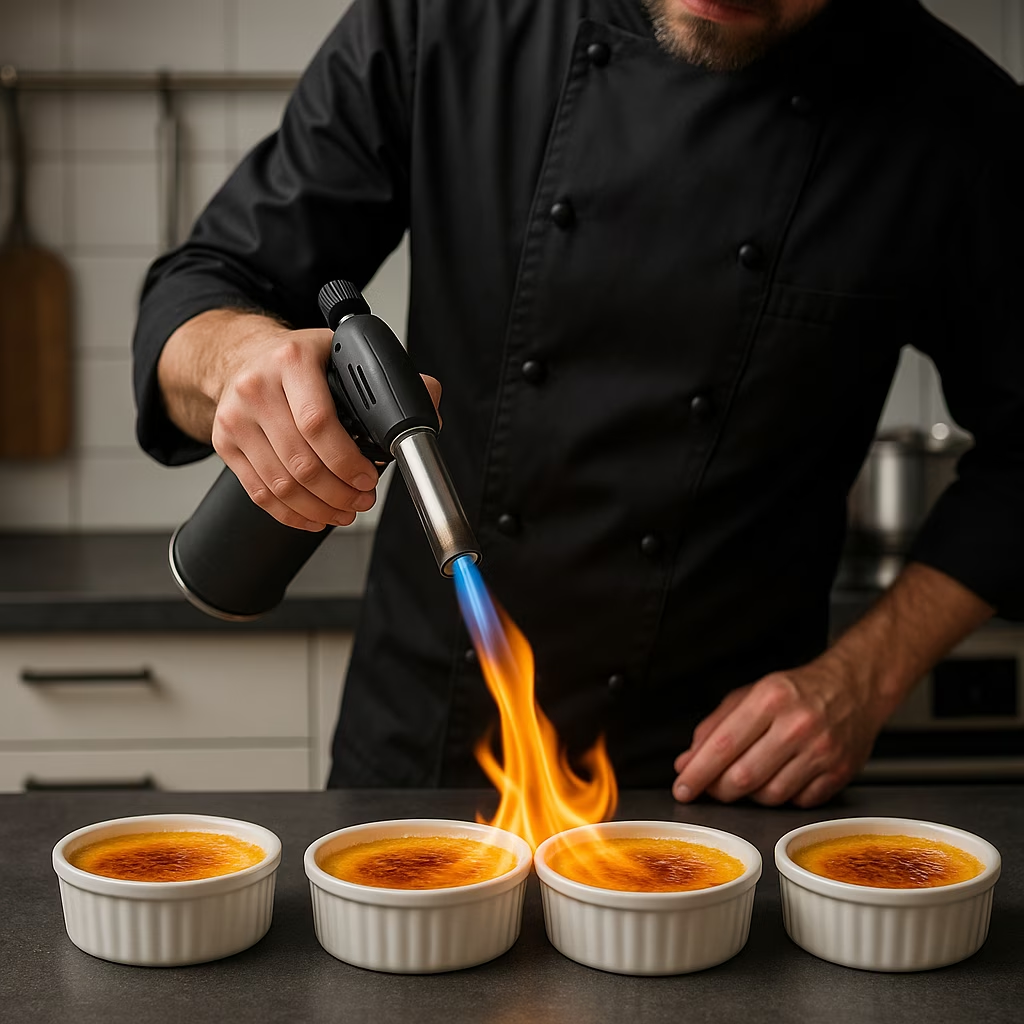
Sous Vide: Just Another Tool in Your Arsenal
Let me be clear about something fundamental: sous vide isn't magic, and it's certainly not inherently better than roasting, frying, or braising. It's simply another technique that offers precise temperature control. While traditional roasting creates significant temperature gradients within the meat, sous vide delivers uniform doneness from edge to center. This precision is particularly valuable with lean white meat like turkey breast, where conventional methods often struggle to maintain moisture.
The Turkey Leg Dilemma: Why I Stick to Traditional Methods
Through extensive experimentation, I've reached a clear conclusion about turkey legs: sous vide just isn't worth the effort. Turkey legs are remarkably forgiving through traditional cooking methods, and the incremental improvement from precise temperature control doesn't justify the extra work. I much prefer the rich, developed flavors from preparations like red wine-braised turkey legs or roasting turkey in parts.
White Meat Revelation: Where Sous Vide Truly Shines
Turkey breast is where sous vide transforms from interesting technique to game-changer. The ability to cook at lower temperatures while ensuring safety through precise timing results in incredibly moist, tender meat that's nearly impossible to achieve through conventional roasting.
Understanding Sous Vide Safety: It's All About Time and Temperature
Many home cooks get nervous about sous vide safety, but the principles are straightforward once you understand them. The common "165°F = safe" guideline is actually an oversimplification. Pasteurization is more like a slow siege than an instant bomb - it's about maintaining temperature for specific durations.
Here's the crucial insight: turkey cooked and held at 140°F for 30 minutes is just as safe as turkey cooked at 165°F for 10 seconds. The USDA charts show that at 140°F, it takes about 28 minutes to achieve the same 7-log10 reduction in bacteria count that happens in seconds at 165°F.
| Temperature | Time for 7-log10 Reduction |
|---|---|
| 165°F (74°C) | <10 seconds |
| 150°F (66°C) | 2.8 minutes |
| 140°F (60°C) | 28 minutes |
| 130°F (55°C) | 112 minutes |
Note: These times are for salmonella pasteurization and begin after the meat reaches target temperature.
Finding the Perfect Temperature: My Extensive Testing
I cooked turkey at five-degree intervals from 130°F to 160°F, fine-tuning the most promising results. After all this testing, my personal favorite emerged: 145°F (63°C) for two and a half hours. At this temperature, the breast maintains a texture similar to traditional roast turkey but with significantly improved moisture and tenderness.
The Skin and Bones Question: Insulation, Not Magic
I conducted side-by-side tests with skin-on, bone-in breasts versus skinless, boneless preparations. The results were fascinating: when sliced from the thickest part, there was no discernible difference. However, near the thinner tapered end, the skinless, boneless sample was slightly mealier and drier.
This isn't because skin and bones transfer flavor or juices - they simply act as insulation, slowing heat transfer and preventing the thinner sections from overcooking before the thicker parts are done.
My Breakthrough Method: The Turkey Roll Technique
The real game-changer came when I developed a method to ensure even cooking throughout the entire breast. Here's my step-by-step approach:
-
Remove two breasts from the same turkey
-
Pack them together top to tail, creating a jigsaw-like cylinder
-
Use butcher's twine tied at one-inch intervals to even out any minor thickness variations
This technique offers multiple advantages:
-
✅ Even cooking from end to end
-
✅ Ability to season the interior
-
✅ Natural binding through salt-activated protein cross-linking
-
✅ Creates a beautiful, uniform presentation
Solving the Crispy Skin Dilemma
The biggest challenge with sous vide turkey has always been achieving that perfect crispy skin with authentic roasted flavor. My solution? Roast the skin separately!
Here's my foolproof method:
-
Spread the skin flat on parchment paper
-
Season generously
-
Top with another parchment sheet
-
Sandwich between two rimmed baking sheets
-
Roast in a conventional oven
The result? A perfectly crisp, flat sheet of turkey skin that shatters into serving-sized pieces. Since it's not wrapped around steaming meat, it stays crisp longer and delivers intense roasted flavor.
Putting It All Together: My Complete Approach
When I serve this turkey now, the response is dramatically different from that 2007 disaster. The moist, evenly cooked breast paired with separately roasted crispy skin creates an experience that combines the best of both worlds: sous vide precision with traditional roasted flavor.
I love plating individual portions with both the sliced breast and crispy skin shards. The gravy, made from the trimmed breastbone, adds another layer of richness. It's the kind of meal that makes people say, "This is so good, it looks professional!"
Key Takeaways for Your Sous Vide Turkey Adventure
-
White meat benefits most from sous vide precision
-
🌡️ 145°F for 2.5 hours delivers ideal texture and moisture
-
🧵 The turkey roll technique ensures even cooking
-
🍗 Roast skin separately for authentic crispness and flavor
-
⏱️ Safety is about time AND temperature, not just temperature
-
💧 Overcooking is difficult with sous vide - err on the side of longer cooking times
After years of experimentation, I can confidently say this method produces the most consistently excellent turkey breast I've ever tasted. The combination of sous vide precision with traditional roasting techniques creates a result that honors holiday traditions while embracing modern cooking science. Give it a try - your Thanksgiving guests will thank you!