 SousVideInsight
Discover the surprisingly simple art of cooking fresh foie gras, a luxurious delicacy often shrouded in culinary intimidation. This guide demystifies the process, revealing how to perfectly sear this forgiving protein for an unparalleled, decadent experience.
Foie gras. The very name evokes images of gilded dining rooms, hushed tones, and a price tag that whispers of exclusivity. A non-existent survey, perhaps conducted by the top statisticians of our times, might suggest that many believe this delicacy is forever confined to the realm of fine dining. The fear is palpable: a luxurious ingredient, costing a small fortune per pound, and the terrifying prospect of ruining it in one's own kitchen. This paranoia is so widespread that one might advise producers to stamp their packaging with a simple, reassuring message: "Don't Panic." And truly, one shouldn't. For beyond its aura of untouchable luxury lies a beautiful, simple truth: fresh foie gras is one of the easiest, most forgiving proteins to cook in the world. Simpler than a steak, more resilient than a fish fillet, it is, by its very nature, nearly foolproof.
The journey to appreciating this ingredient is often a winding one. An early, ill-fated encounter at a fusion restaurant, where a thin slab was drowned in an overwhelming chocolate-chili sauce, can breed a lasting prejudice. This is a culinary injustice, as the fault lay not with the foie gras itself, but with its preparation. A subsequent, hormone-fueled cooking adventure might lead to the tragic, bubbling demise of a costly pâté de foie gras in a hot skillet—a clear case of mistaken identity, confusing the preserved terrine with the fresh, sear-able liver. It is a rite of passage, a lesson learned in the difference between the preserved and the pristine.
True understanding often dawns in the heat of a professional kitchen. There, one discovers the essence of foie gras: a decadent richness imbued with a distinct sweetness, its magic lying in the fact that its fat melts at a temperature just below that of the human body. What enters the mouth as a semi-solid slab slowly, luxuriously dissolves, coating the tongue in a wave of unparalleled flavor. While charcuterie—the curing and forming into terrines and torchons—is the most common preparation, this is primarily a method of preservation, extending the shelf life of a precious commodity. For the purest, most immediate pleasure, nothing surpasses a thick slab of fresh foie gras, seared quickly in a blistering pan to a perfect medium-rare.
The Foundation: Sourcing and Storing
The journey to perfection begins with the source. Quality is paramount. Many chefs hold a particular fondness for the product of La Belle Farms in Ferndale, New York, prized for its ability to retain a beautiful shape during cooking while delivering full, rich flavor. For the pan-searing purist, Grade "A" foie gras is the goal, characterized by fewer veins and blemishes. It can be purchased as a whole lobe (1.5 to 2 pounds) or conveniently pre-portioned into slices.
Storage is straightforward:
-
Freezer-Friendly: Like bacon, foie gras freezes remarkably well. If a whole lobe seems daunting, fear not. Wrap the unused portion tightly in foil, then plastic wrap, and seal it in a zipper-lock bag with the air pressed out. A vacuum sealer is the gold standard for long-term storage.
-
Mind the Portion: Restaurant servings can be notoriously small. At home, one has the freedom to enjoy a proper portion—a slab of at least a couple of ounces, something that demands more than a single, fleeting bite. This allows one to truly savor the textural contrast between the crisped, caramelized exterior and the soft, yielding center.
The Technique: From Blade to Plate
The process of preparing foie gras for the pan is a ritual of precision and heat.
-
Separate and Conquer: If starting with a whole foie, work quickly with cool hands to gently separate it into its two natural lobes. Speed is key to keeping it firm.
-
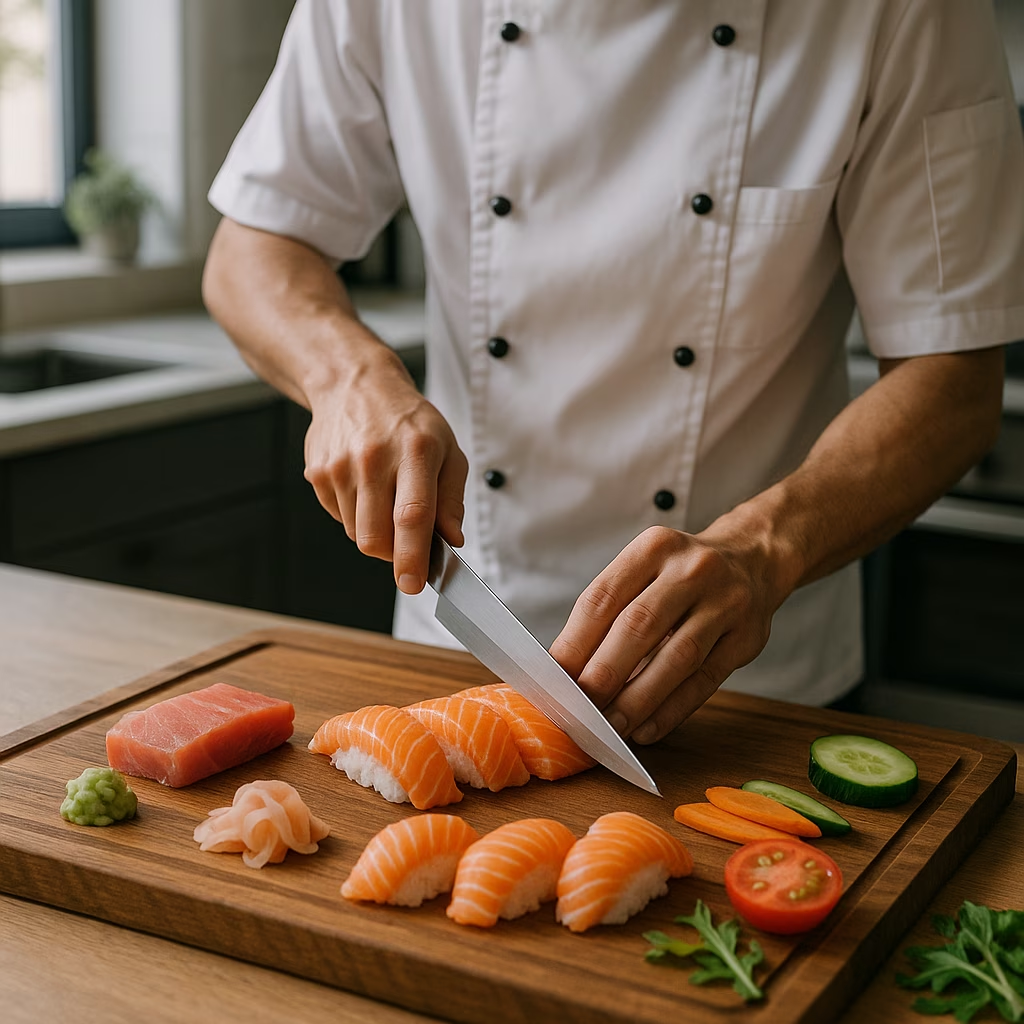
The Hot Knife Secret: This is the non-negotiable, cardinal rule. Treat the foie like the richest mousse cake imaginable. Heat your knife under hot tap water before every single cut. A cold blade will catch and tear the delicate fat; a hot one glides through, melting the fat just enough to create clean, smooth portions ready for the sear.
-
Go Thick or Go Home: Thickness is a guardian against overcooking. Thin slices of this fragile fat will shrivel into greasy, deflated balloons. Aim for slabs at least half an inch thick. For smaller servings, cut a thick slice and then divide it crosswise, maintaining that crucial thickness. Remember: hot knife, every time.
-
Scoring (For Flair): While duck breast is scored to prevent curling, foie gras doesn't technically require it. The practice persists mainly for elegance. A light cross-hatch score on the presentation side adds those extra-fancy points.
-
Season with Abandon: Do not be shy with salt and pepper. A significant amount of seasoning will be lost to the rendered fat during cooking, so be more generous than your instincts might suggest.
The Cook: Where Simplicity Reigns
Now comes the so-called hard part, which is, in reality, beautifully simple. There are only two true failures: a pan that isn't hot enough, or a moment of distraction during its brief minute in the spotlight.
The Method:
-
Select a skillet that can take high heat—cast iron, carbon steel, stainless steel. Heat it until it is visibly smoking hot.
-
Carefully lay the seasoned slabs in the pan, scored-side down if you've scored them. It must sizzle, smoke, and render fat immediately. If it doesn't, swiftly remove the foie and let the pan heat further.
-
The cook is rapid-fire: merely 30 seconds to 1 minute per side is all it takes to achieve a deep, mahogany-brown crust. Unless one is a line cook juggling a dozen tickets, distraction is unlikely.
-
Flip with a thin metal spatula. For extra-thick slices, one can baste them with their own bubbling fat using a spoon to ensure even cooking.
-
The Final Rest: Transfer the seared foie to a paper towel-lined plate and let it rest for about one minute. This allows the intense residual heat to gently soften the center to that perfect, yielding consistency.
The Pairing: A Symphony of Flavors
Foie gras, with its rich, sweet, and faintly funky profile, sings in harmony with fruit. The classic pairings are a testament to this:
| Category | Perfect Pairings | Preparation Ideas |
|---|---|---|
| Dried Fruits | Figs, Prunes, Apricots | Reduce into a mostarda or chutney. |
| Stone Fruits | Peaches, Plums, Nectarines, Sour Cherries | Poach in a sweet wine like Sauternes. |
| Citrus & Berries | Oranges, Raspberries | Create a vibrant purée or gastrique. |
A recipe for Pan-Seared Foie Gras with an Orange Purée exemplifies this philosophy, balancing the liver's richness with the bright, aromatic sweetness of candied citrus and spices.
In essence, the story of foie gras at home is a demystification. It is a narrative that transforms a symbol of inaccessible luxury into an achievable act of culinary joy. It requires not advanced technique, but rather respect for the ingredient, attention to a few key principles—the hot knife, the hot pan, the generous seasoning—and the courage to embrace its decadence fully. In 2026, the finest dining experience may no longer be reserved for the restaurant; it can be the quiet, triumphant sizzle in one's own kitchen, culminating in that first sublime bite where crisp crust gives way to a melting, unforgettable center. 🦆✨